
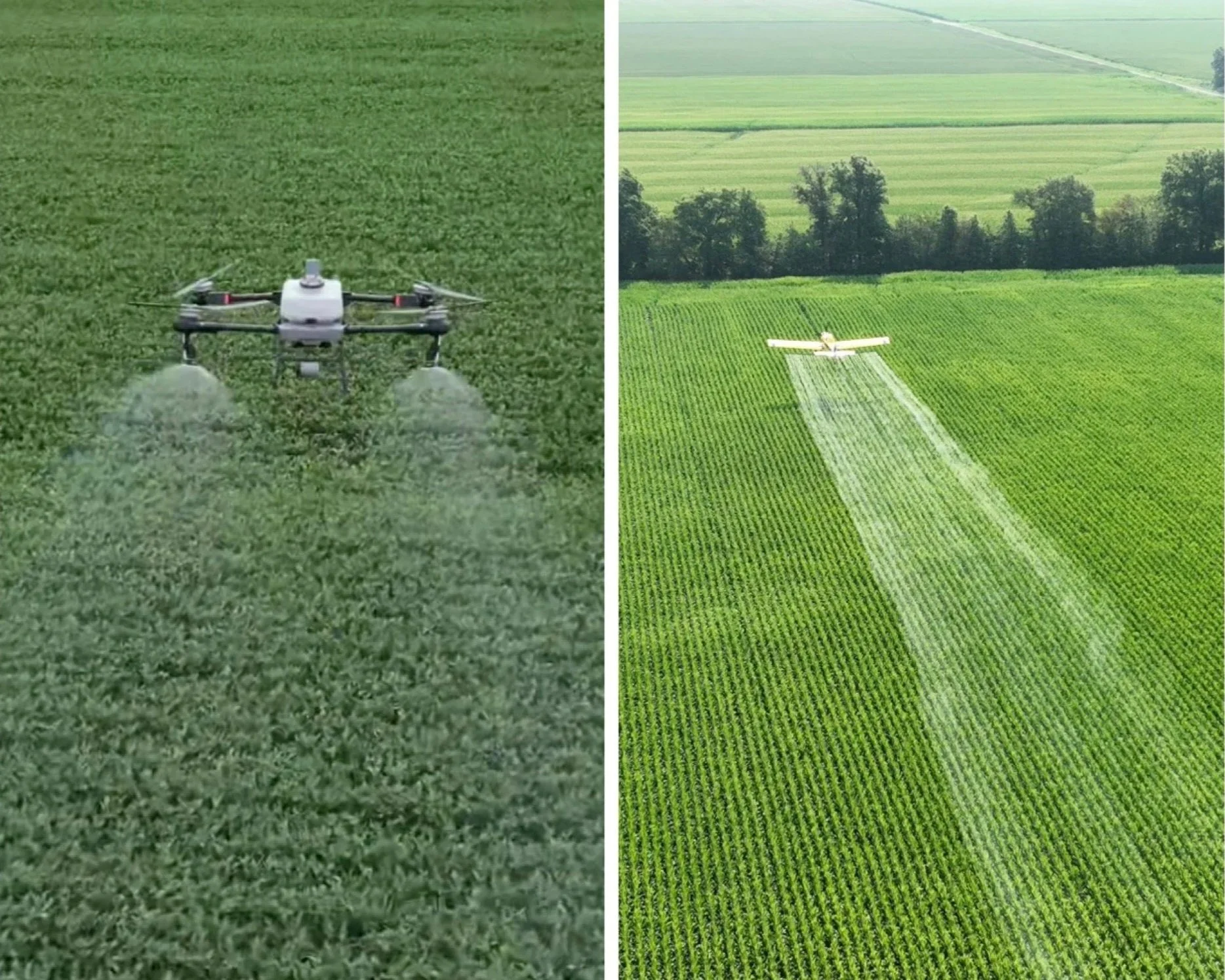
Manned V.S. Unmanned
Facts vs. Fiction:
Unmanned can push the chemical into the canopy better than manned aircraft:
Once on flight an unmanned aircraft is the same as a helicopter or fixed wing. The weight of the aircraft has more of an impact on canopy movement. Current weights of unmanned aircraft do not come close to that of manned aircraft. On the light side a helicopter weighs 2,500 pounds and the largest agricultural aircraft weight 16,500.
Do not confuse the hover or landing of an aircraft to what it’s doing when in flight. There are different aerodynamic forces at work in each phase of flight. Both rotorcraft and drone when in flight the rotor becomes very similar to a wing creating lift. The wing span and the rotor width will in part plan a large factor in determining the swath width of the application method.
A automobile analogy would be both a Semi and Prius do 70 MPH, now much wind do you feel when the semi passed versus the prius?
Unmanned aircraft provide better coverage:
Questions to ask each operator regardless of platform
What is your swath width?
How did you determine your swath?
What is your average droplet size?
Why are these questions critical? Because they will have a huge impact on how effective your application is going to be.
When the total rotor diameter or wing span is 15 feet, the reality is that there is no way to have an effective swath of 40 feet! When operators do this in the industry is called wide swathing, this becomes very evident in streaking of fields.
Droplet size - We strive for an average droplet of 400 Microns. Droplets that are small 150 or less microns are going to drift. This is what we do not want.
Rotary Atomizers have been used in aerial application for years. We have learned thru the years that this is not the best nozzle for cow crop application. Resent studies and trails have found that the straight stream nozzle has been providing the best coverage and efficacy for row crop that is under pressure.
The answers to the questions above come from Operation Safe Pattern testing. More information on pattern testing can be found at the following:
Unmanned is cheaper:
Be certain you are comparing apples to apples. In most cases when someome uses manned aerial application they are hiring a service to perform the work. They are not acquiring the aircraft, paying for fuel, insurance, maintenance, hangaer, etc. You are hiring a professional service to perform the task.
If you are acquiring the unmanned platform and plan on applying yourself factor in what your time si worth? Time is your most valuable asset.
What is the unmanned assets worth after 3 years? What are you liable for if you drift? Do you have the proper insurance?
What if you are injured by the unmanned unit?
Timing of Application:
Based on all the major fungicide manufacturers VT is still the best one time application of fungicide on corn and R3 on beans.
What is your application window for maximum ROI?
How many acres can you effectively treat per day?
How many acres do you have to cover?
In our northern territory our smaller aircraft can treat 1500-1800 acres a day.
In our southern territory our smaller aircraft can treat 1000-1200 acres a day.